



Challenge / Unauthorised passenger transport

Unauthorised rideshare, taxi and hire-vehicle activity around pickup zones.

Aero Ranger helps enforcement and transport teams identify passenger vehicles operating where they are not authorised, connect activity to zones and approved lists, then manage inspection, evidence, case and reporting workflows.

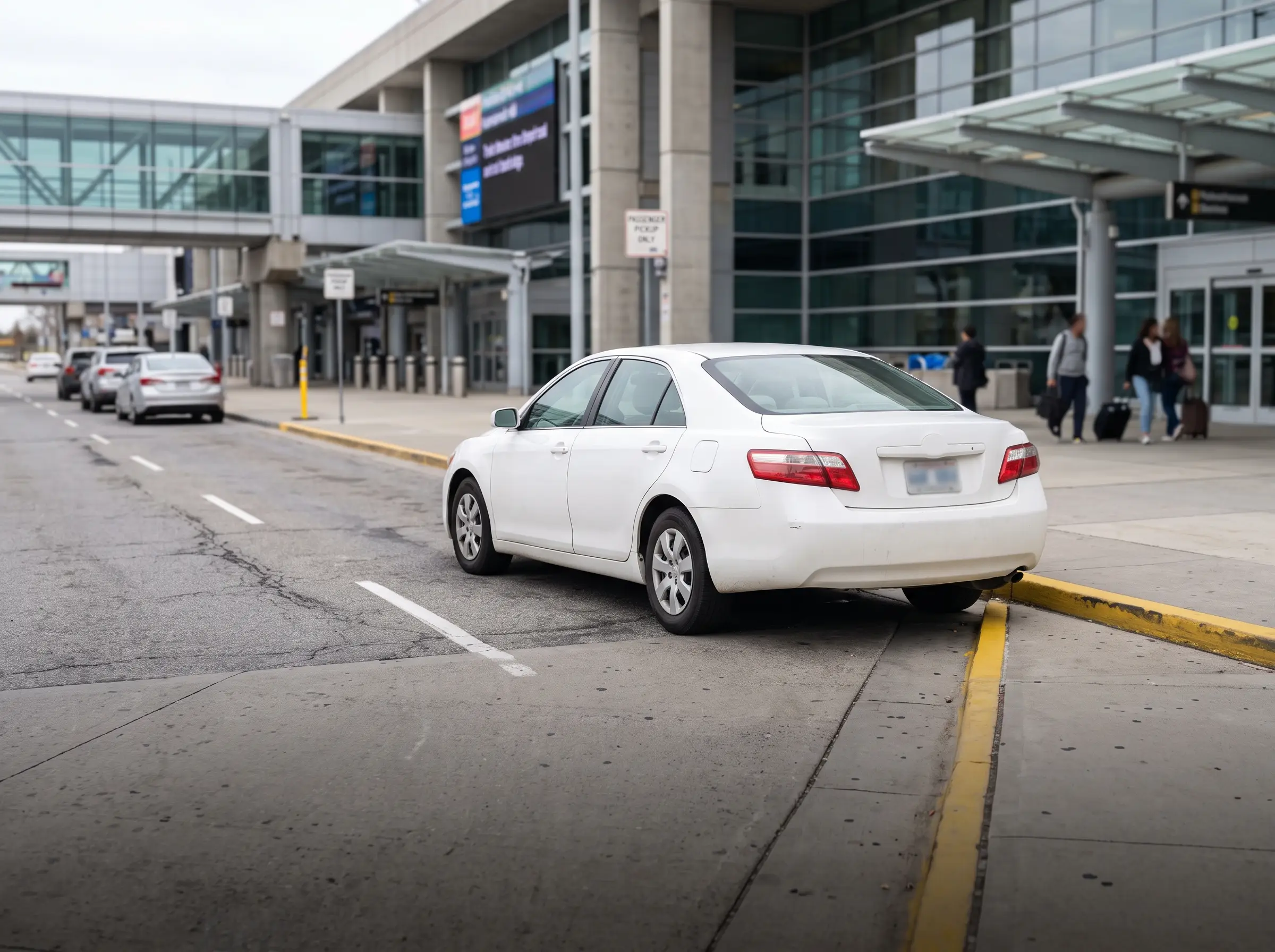
Compliance officers checking rideshare and hire vehicles in a terminal pickup lane at dusk
Catch unauthorised activity where the kerb is moving fast. Compare vehicle sightings with approved records, pickup-zone rules, inspection notes and case outcomes in one workflow.
ListsAuthorised vehicles, operators and permit categories
ZonesPickup areas, ranks, event precincts and restricted kerbside space
CasesComplaints, inspections, evidence and review outcomes
ReportsActivity, repeat issues, workload and compliance outcomes

The issue is not vehicle safety as a category. It is unauthorised operators blending into busy pickup zones.

Airport lanes, event precincts, taxi ranks and CBD kerbside areas move quickly. Enforcement teams need to know whether a vehicle, operator or permit is authorised in that place at that time before they act.

Unauthorised vehicles look normal

A vehicle can appear like any other pickup vehicle while lacking the required authority, permit, operator status or zone permission.

Pickup windows are short

Airport lanes, ranks, venues and event precincts create short windows where unauthorised activity can affect passengers and approved operators.

Complaints need evidence

Teams need to connect sightings, inspection notes, complaint detail and outcome decisions without rebuilding the record by hand.

Reviews need a clean trail

Passenger transport work can involve sensitive vehicle, operator and location data, so access, retention and review history need to be deliberate.

What the workflow needs to keep together.

The useful question is not which feature exists. It is whether the team can see the place, rule, evidence, exception, next action and review history before making a decision.

Authorised vehicle and operator checks

Import or maintain authorised vehicle, operator, permit, exemption and category records so exceptions are measured against a governed source of truth.

Permit categories, imports, accounts, plate exclusions and session checks.

Pickup-zone rules

Define pickup lanes, ranks, short-stay areas, loading rules, event windows and exception categories for passenger vehicle activity.

Zones, schedules, grace periods, repeat detection and rule profiles.

ANPR and field capture

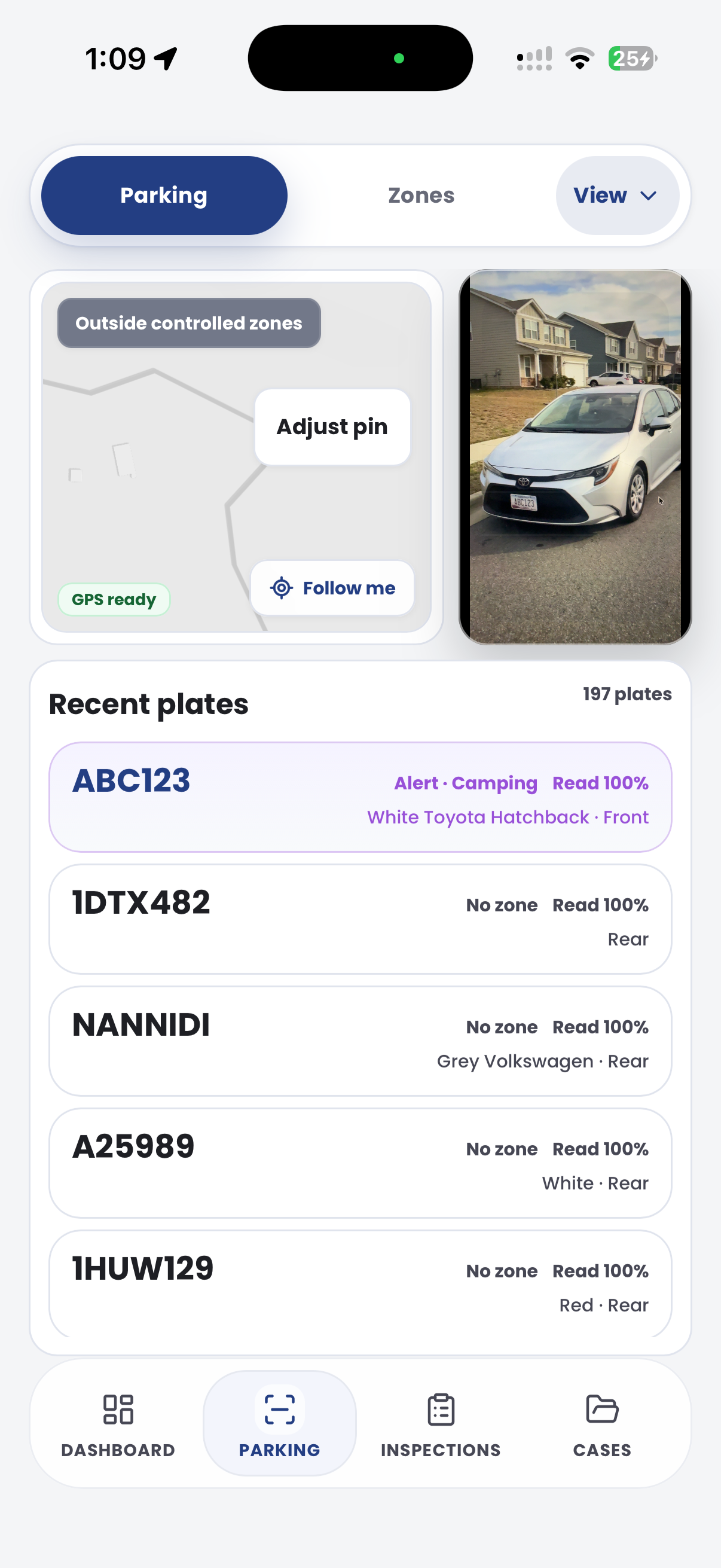
Use mobile capture, fixed capture or integrations to record vehicle activity with time, location and confidence context.

Mobile ANPR, fixed capture, device health and read validation.

Inspection caseflows

Open exceptions into a repeatable process for inspection, warning, escalation, complaint handling, closure or referral.

Case stages, inspections, tasks, documents and status automation.

Complaint and evidence review

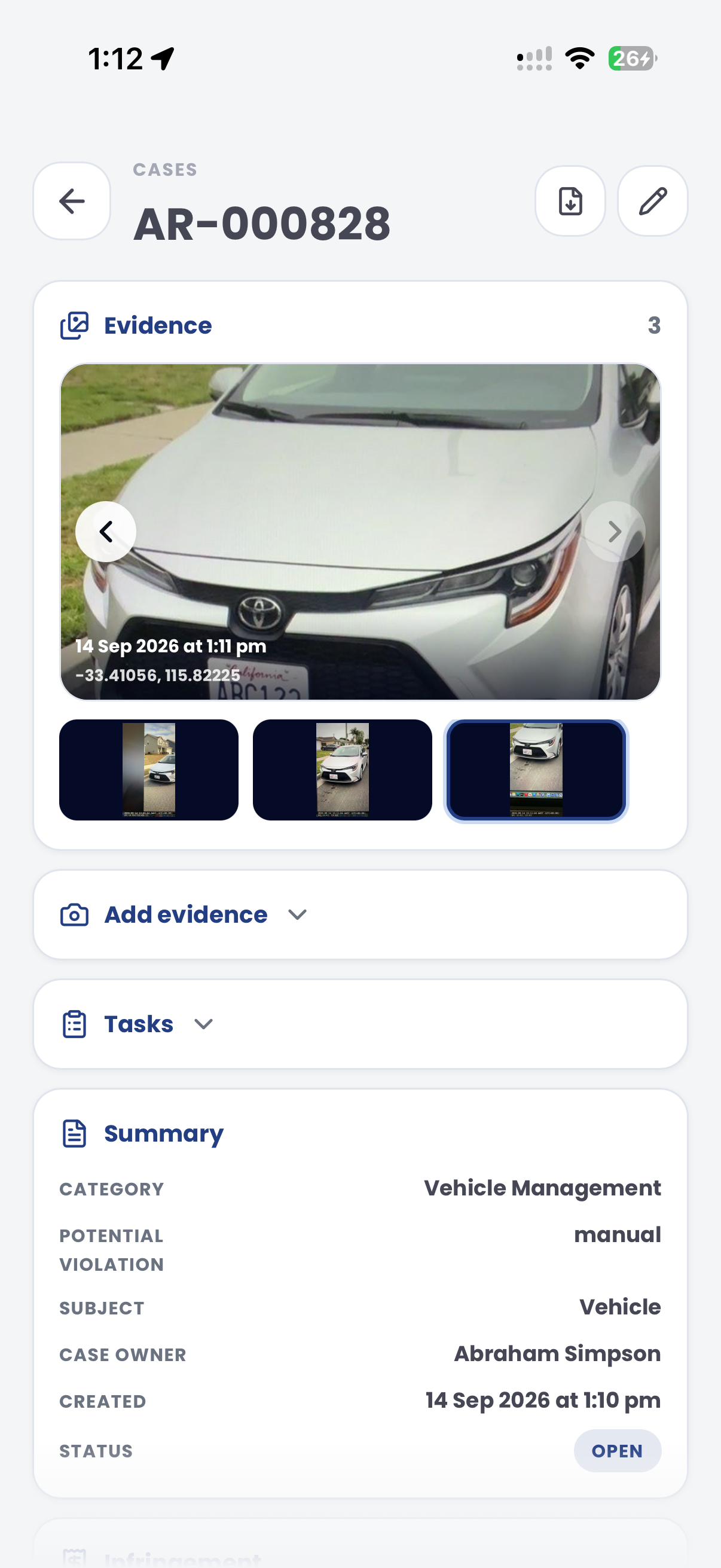
Keep images, notes, sightings, complaint records, letters and decisions attached to the same case timeline.

Evidence packages, notes, images, timeline events and audit trail.

Operational reporting

Show leaders where activity is concentrated, which categories create workload and where rules or staffing need adjustment.

Intel dashboards, vehicle replay, exports and saved reports.

See the pickup zone, then review the exception.

Teams need the plate, location, zone rule, operator context, inspection record and review decision visible together.

Passenger vehicle pickup zone with compliance officers under blue and purple evening light

Authorisation context

Check whether the vehicle, driver, operator, booking service, permit or exemption is allowed to operate.

Pickup-zone context

Understand whether the activity occurred in a terminal lane, rank, CBD kerbside, event precinct or restricted zone.

Review context

Keep evidence, inspections, notes, complaints, documents and decisions attached to the same case.

Example CORE case screen for passenger transport

A transport access review keeps pickup-zone activity, approved lists, evidence and referral outcome together.

City of Utopia Cases PT-70641 List checked
  1. Captured
  2. Zone match
  3. Authorised list
  4. Referral
  5. Closed
Pickup evidence
Vehicle observed in managed pickup area evidence image Vehicle observed in managed pickup area 21:14 · Airport kerb
Passenger transport case
Authorisation review
Example transport rule

Passenger Transport Act 1990 (NSW)

Vehicle operating in a managed pickup area without authorisation

Example penalty $300
Authorised listNo match
ReferralPartner agency
DecisionRefer
Next actions
  • Check approved operator
  • Attach pickup evidence
  • Prepare referral
Chain of evidence collection

Aero Ranger keeps the issue photos, place context, rule context and follow-up state together so the case can be checked later without rebuilding the record.

Vehicle observed in managed pickup area evidence image
Vehicle observed in managed pickup area · 21:14 · Airport kerb
Issue photo Vehicle observed in managed pickup area

The issue photo stays on PT-70641 with the case note and current case status.

Place context Airport kerb

Site, street, reserve, bay, kerbside or zone context stays attached so reviewers can see where the issue occurred.

Rule context Passenger Transport Act 1990 (NSW)

The relevant signage, permit condition, local-law category or operating rule is recorded beside the issue evidence.

Follow-up state 21:14

Later photos, reinspection notes, notice evidence and closure decisions remain in the same case trail.

A typical council workflow in Aero Ranger CORE.

Unauthorised passenger transport review is an access and approval workflow. It is most useful around airports, event precincts, ranks and managed pickup areas where authorised operators and casual traffic mix.

Typical council workflow

Set the operating area

Confirm taxi, rideshare, hire-vehicle, shuttle, bus or contractor areas, approved vehicle lists, operating times and partner-agency rules.

Review the activity

Attach vehicle sightings, photos, pickup or dwell context, list checks, officer observations and any operator history.

Action or refer

Educate, warn, issue, refer to a transport regulator or close as authorised, then report repeat vehicles and pressure points.

Workflow path

  1. Pickup-zone capture
  2. Authorised-list check
  3. Operator review
  4. Evidence case
  5. Inspection or referral
  6. Outcome
  7. Report

The passenger transport review record would hold:

Vehicle and operator context

Rego, vehicle type, operator or permit record where available, approved list status and repeat activity.

Zone context

Taxi rank, rideshare area, airport kerb, event pickup zone, operating hours and authorisation rule.

Evidence

ANPR read, photo, GPS point, timestamp, officer note, passenger activity note and list-check result.

Actions

Inspect, warn, issue, refer to partner agency, monitor repeat activity, close or escalate.

Reporting

Unauthorised activity by zone, repeat vehicles, operator trends, peak periods and referral outcomes.

One operating loop from approved list to review-ready outcome.

Start with regulated vehicle lists and one high-pressure pickup area, then extend into ranks, events, terminal lanes and complaint-led review.

Load approved records

Import authorised vehicle, operator, permit, exemption or category records with clear ownership.

Map regulated zones

Define pickup lanes, ranks, venues, kerbside controls and event rules.

Capture activity

Collect plate sightings, inspection observations, complaints and field evidence.

Review exceptions

Open unauthorised, expired, repeat or complaint-led matters into cases with owners and statuses.

Report outcomes

Track activity, interventions, closed cases, repeat vehicles and operational trends.

The same model supports adjacent transport compliance problems.

Once authorised lists, zones, evidence and cases are configured, related passenger-vehicle workflows can reuse the same operating model.

Missed vehicles of interest

Use governed lists and alert delivery when authorised teams need faster response to priority vehicles.

Airport ground transport

Manage taxis, rideshare, shuttles, buses, VIP vehicles and contractors around terminal zones.

Permit-zone misuse

Check whether a vehicle is authorised for a particular zone, time window or permit category.

No active parking session

Compare vehicle activity against app-provider or meter sessions before action.

See unauthorised passenger transport enforcement from sighting to case review.

Bring a real pickup-zone, rank or rideshare scenario and we will map approved lists, zone rules, evidence, inspections, cases and reporting.