Aero Ranger CORE feature
Identify vehicles parked contrary to a configured direction or orientation rule.
30 days risk free. Start with one workflow and a clear success criterion.
The operating problem
Wrong Orientation Detection is part of the rules and alerts capability in Aero Ranger CORE. Identify vehicles parked contrary to a configured direction or orientation rule. It is designed for councils that need consistent thresholds while retaining human review, documented exceptions and organisation-controlled escalation.

The source workflow
Wrong Orientation Detection is part of the rules and alerts capability in Aero Ranger CORE. Identify vehicles parked contrary to a configured direction or orientation rule. It is designed for councils that need consistent thresholds while retaining human review, documented exceptions and organisation-controlled escalation.
The rule can narrow the activity presented to staff, but the resulting detection remains an item for authorised review rather than an automatic legal conclusion.
Available fields, thresholds, statuses and actions follow the organisation's configuration and each user's permissions. Councils can align wrong orientation detection with their own policy, local-law, privacy, records-management and review requirements rather than relying on a fixed process.
Available fields, rules and actions follow the organisation's configuration and each user's permissions.
Bring subjects, locations, rules, schedules and known exceptions into a clear operating list.
Group work by area, responsibility, timing, route or operational priority.
Record evidence, location, time, checklist responses and officer notes in context.
The reviewable record
Wrong Orientation Detection is part of the rules and alerts capability in Aero Ranger CORE. Identify vehicles parked contrary to a configured direction or orientation rule. It is designed for councils that need consistent thresholds while retaining human review, documented exceptions and organisation-controlled escalation.
A focused first test
Wrong Orientation Detection is part of the rules and alerts capability in Aero Ranger CORE. Identify vehicles parked contrary to a configured direction or orientation rule. It is designed for councils that need consistent thresholds while retaining human review, documented exceptions and organisation-controlled escalation.
The rule can narrow the activity presented to staff, but the resulting detection remains an item for authorised review rather than an automatic legal conclusion.
Available fields, thresholds, statuses and actions follow the organisation's configuration and each user's permissions. Councils can align wrong orientation detection with their own policy, local-law, privacy, records-management and review requirements rather than relying on a fixed process.
Available fields, rules and actions follow the organisation's configuration and each user's permissions.
30 days risk free. Start with one workflow and a clear success criterion.
Related operating considerations
The rule can narrow the activity presented to staff, but the resulting detection remains an item for authorised review rather than an automatic legal conclusion.
Available fields, thresholds, statuses and actions follow the organisation's configuration and each user's permissions. Councils can align wrong orientation detection with their own policy, local-law, privacy, records-management and review requirements rather than relying on a fixed process.
Available fields, rules and actions follow the organisation's configuration and each user's permissions.
No. Aero Ranger organises records and next actions; authorised staff remain responsible for applying the relevant requirements.
Customer field stories
Seven short case studies covering parking, patrol, evidence and compliance workflows in real operating environments.
A council team discusses field capture, review and day-to-day parking operations.
Full product walkthrough
Watch the full CORE walkthrough for a closer look at connected field work, evidence, cases, permits and reporting.
Use a free 1:1 strategy session to outline the current process, name a practical success criterion and decide whether to start a 30-day risk-free trial.
Free from Aero Ranger
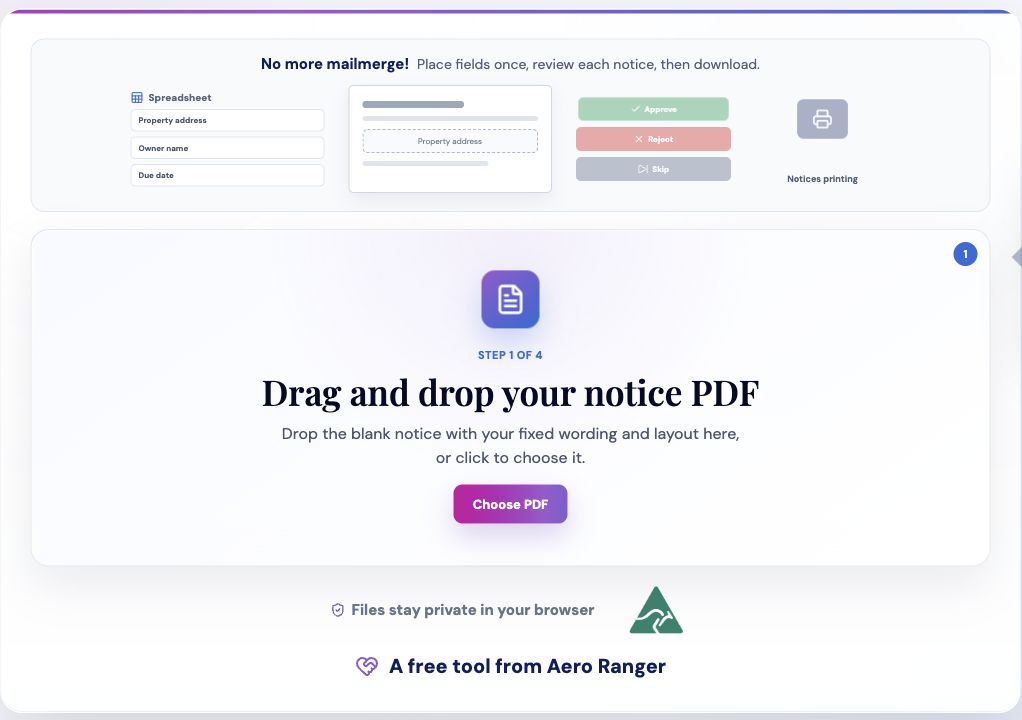
No login required. Aero NoticeFlow turns spreadsheet rows and your approved notice PDF into individual notices you can review and download in your browser.