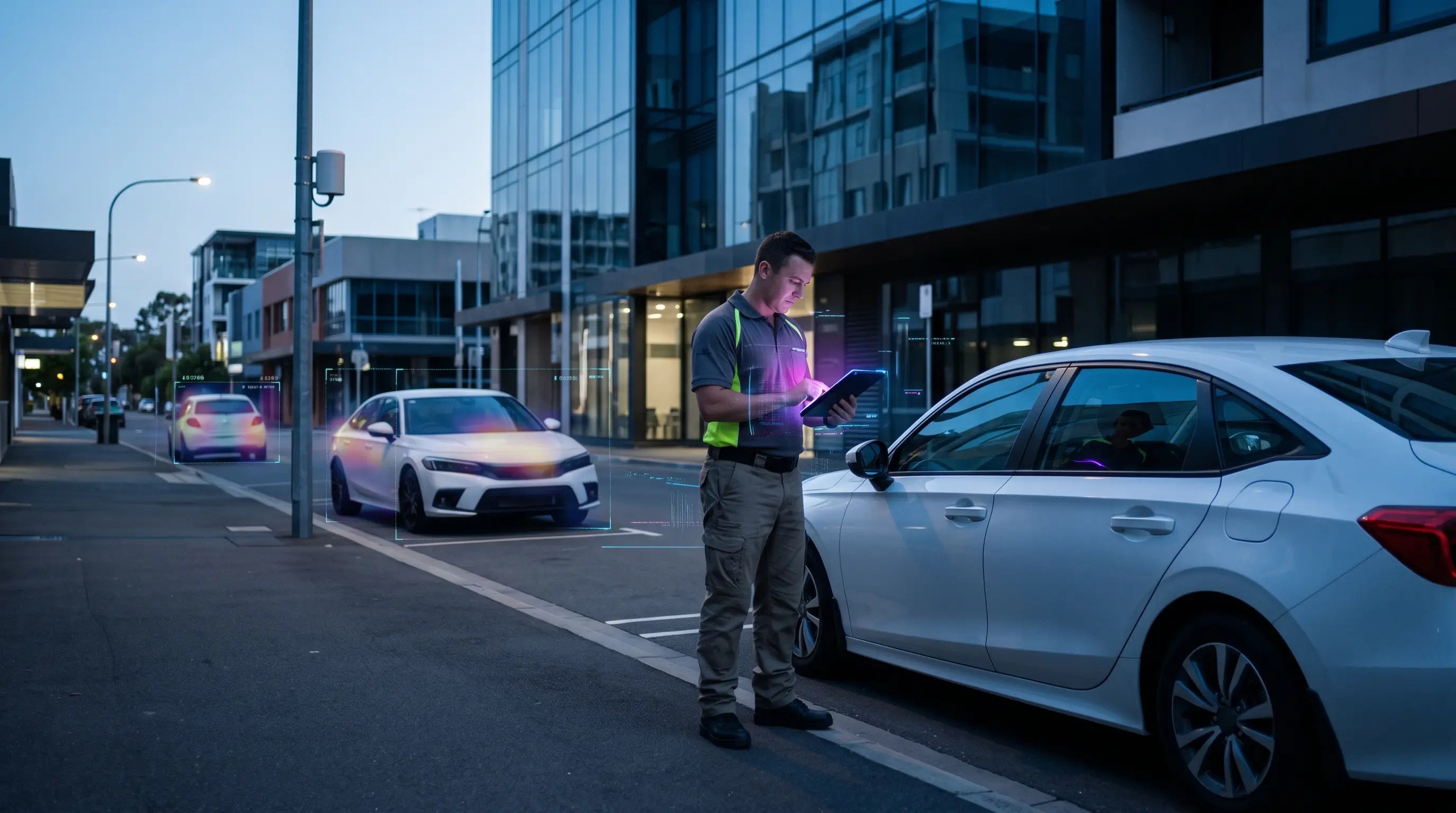
Australia and New Zealand airports - Airport parking operations bring short-stay, permit, kerbside and evidence-review workflows into one busy environment.
Why terminal parking is a different operating model
Airport parking is not just a larger version of street parking. Terminal roads, staff permits, contractor access, passenger pickup, taxis, rideshare areas, accessible bays, loading zones and short-stay car parks can all sit close together while following different rules.
That mix creates a review problem. A plate read, inspection photo or officer note needs to be interpreted against the correct place, time window, permit category and operating rule. Without that context, a case reviewer may have to reconstruct the event from separate systems before deciding whether follow-up is appropriate.
What a practical workflow should show
A useful airport parking record should show the site, terminal zone, vehicle, observation time, applicable rule, permit or session status, supporting images, reviewer notes and outcome. It should also separate operational categories such as no active session, overstay, loading-zone misuse, permit mismatch and vehicle-of-interest review.
The system design should leave room for exceptions. Airport environments often involve authorised contractors, emergency access, delayed passengers, mobility needs and temporary traffic changes. Those factors should be visible in the case record where they affect the review pathway.
Reporting without unsupported claims
Reporting should help operators understand workload and rule design rather than promise a particular enforcement result. Useful airport reports can show repeat locations, case volumes by rule type, time-of-day patterns, unresolved reviews, permit mismatches and matters closed after manual assessment.
Those reports can support planning conversations with parking, landside operations, customer service and compliance teams. They can also show whether a rule is clear enough for officers and reviewers to apply consistently, while leaving legal interpretation and enforcement authority with the responsible organisation.
Related reading
Source
This educational Aero Ranger article consolidates Pixelcase airport-parking migration candidates into broader airport operations guidance. Pixelcase