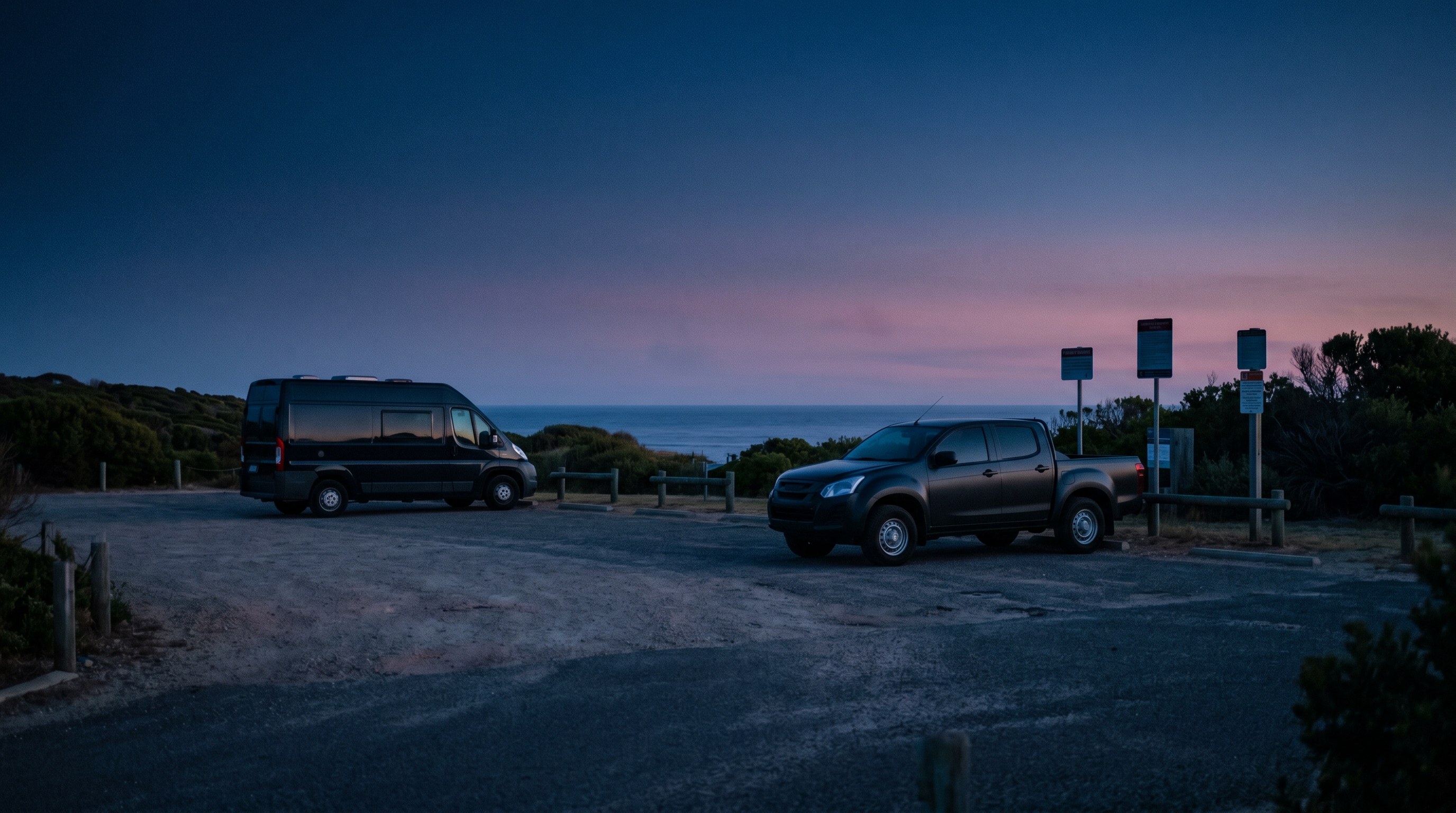
Western Bay of Plenty, New Zealand - Western Bay of Plenty's camping guidance sets clear infringement triggers for freedom camping breaches and self-containment failures.
What Western Bay explains to campers
Western Bay of Plenty District Council’s camping guidance sets clear public expectations for designated areas, self-contained vehicles and stay limits. The page says a $400 infringement fee applies for camping in prohibited areas, and it lists further $400 fine triggers including camping outside a designated area, not being in a certified self-contained vehicle, staying more than three nights, damage, rubbish and improper discharge.
The guidance also says campers can stay in a designated area for a maximum of three nights during any four-week period, with specific exceptions for particular sites. That is exactly the kind of rule that needs structured field records, because the same vehicle may move between nearby places.
Why public guidance should match field workflows
Plain-language public guidance is useful only if it matches what officers see in the field. The mobile workflow should reflect the same designated areas, stay limits, certification checks and infringement categories. If the public page says one thing and the officer checklist says another, the council creates review risk.
The fine trigger should also be recorded as a structured category, not only as a note. That allows reviewers to see whether the issue was location, certification, duration, damage, rubbish or discharge. Each category needs different evidence.
What should be visible in review
For a stay-limit matter, the reviewer needs vehicle identity, location, first night, subsequent nights and the rule period. For a self-containment matter, the reviewer needs certification evidence and the site requirement. For a rubbish or damage matter, photos and clean-up status may be central.
When those details are stored in the case, managers can report on the pattern of non-compliance without manually rebuilding it from spreadsheets. They can also see whether education, signage or site layout might be reducing or increasing certain kinds of cases.
Related reading
Source
Western Bay of Plenty District Council